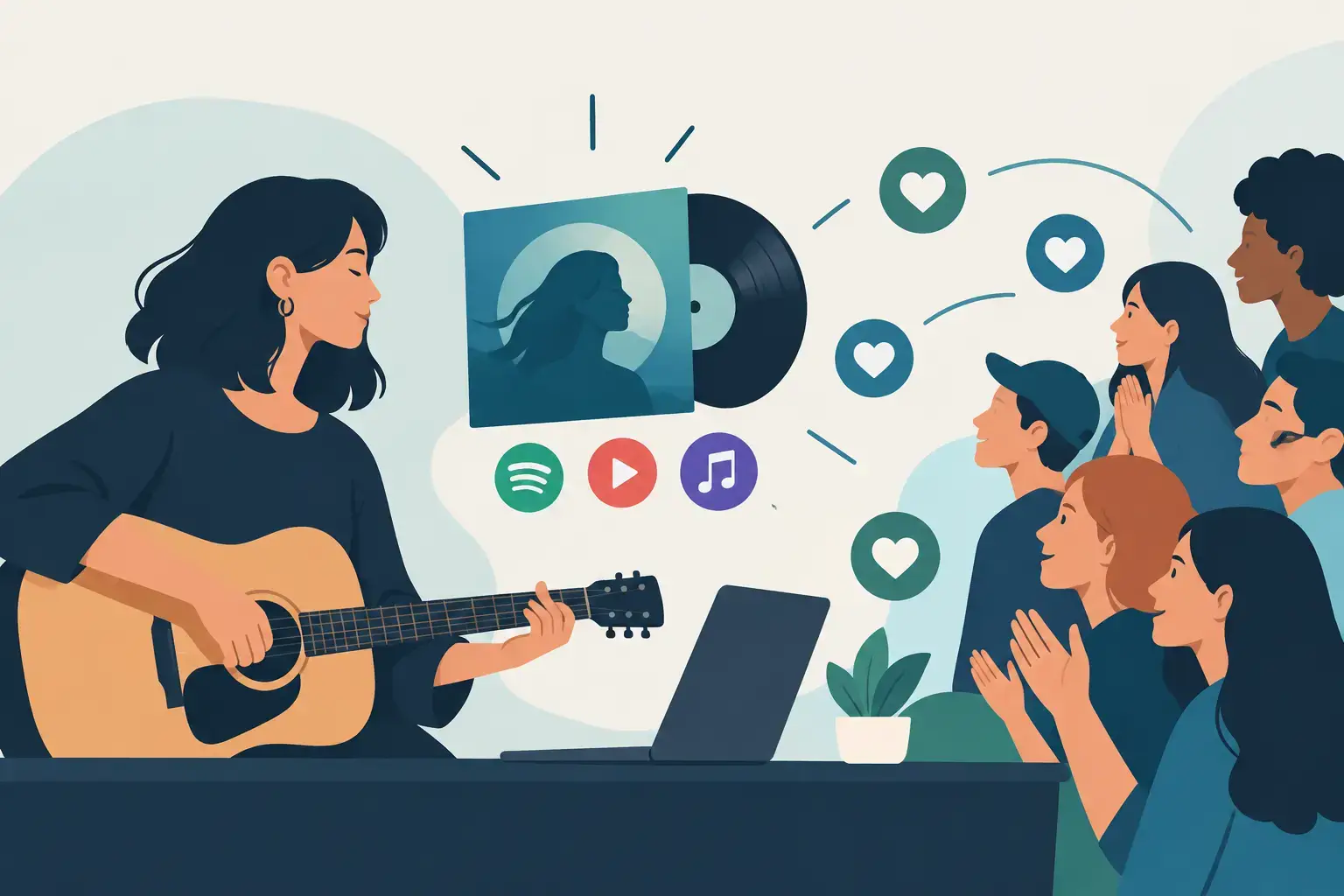
How Artists Build Fandom Through Better Releases
A stream is a moment. Fandom is a decision.
That distinction shapes how artists build fandom in a streaming-first music market. A listener may save a song because the chorus hits at the right time. A fan returns because the artist gives them a sound, a point of view, and a reason to feel part of what happens next.
For an independent recording artist, that difference is everything. Attention is abundant but fragile. People can discover a new track in seconds, then move on just as quickly. Building a real audience requires more than chasing reach. It requires a consistent creative world where every release, visual, post, and direct interaction reinforces the same feeling.
How Artists Build Fandom Starts With a Clear Identity
Genre is useful for discovery, but it should not become a creative cage. The artists people remember are rarely defined by a playlist category alone. They are recognized by an emotional signature: the atmosphere in the production, the perspective in the writing, the way a vocal lands, or the tension between polished pop and raw storytelling.
That identity has to be clear enough for a new listener to understand quickly. It does not mean every song needs the same tempo, subject, or arrangement. It means the music should feel like it came from the same creative center. A synth-pop track, a mainstream pop anthem, and a country-influenced story song can live together when they share a recognizable standard of songwriting and sound.
Michael Joseph Australia operates in that space deliberately, pairing genre-fluid songwriting with AI-assisted production and a focus on premium sonic experiences. The technology is part of the process, not the point of the relationship. Fans respond to the finished feeling: songs that sound intentional, current, and emotionally accessible.
A clear identity also makes communication easier. Instead of posting whatever seems likely to perform that day, an artist can ask a more useful question: does this make the world of the music more recognizable? That filter creates momentum over time.
Give Every Release a Reason to Matter
A release schedule is not a fandom strategy on its own. Releasing frequently can help an artist stay visible, especially on platforms where listeners are constantly offered something new. But volume without distinction can train people to treat songs as disposable content.
Each release needs a simple emotional proposition. Maybe it is a late-night escape, a clean pop rush, a road-trip memory, or a lyric that names a feeling listeners have not been able to explain. The goal is not to manufacture drama. It is to give the audience a doorway into the song.
Before a track arrives, share the part of its story that adds meaning. A short performance clip can work. So can the lyric that changed the song, the production decision that gave it its atmosphere, or a visual that establishes its color and mood. Keep the message focused. Too much explanation can flatten the mystery that music needs.
After release day, keep the song alive by changing the angle rather than repeating the same announcement. One post might focus on the hook. Another can spotlight the lyric listeners are quoting. A third might invite fans to share where they first heard it. This turns a release from a single promotional event into an ongoing conversation.
The trade-off is patience. Not every track will take off immediately, and forcing every release into a viral format can make an artist look interchangeable. Some songs are designed to pull in new listeners. Others deepen the connection with people already paying attention. Both have value.
Build Familiarity Without Becoming Predictable
Fandom grows through repeated contact, but repetition should not feel automated. Listeners need to know what an artist stands for while still having something new to anticipate.
A practical approach is to establish a few repeatable creative signals. That may include a visual palette, a consistent approach to cover art, a production detail that appears across releases, or a recognizable tone in captions and artist updates. These details build familiarity before a listener can even explain why they recognize the work.
At the same time, leave room for surprise. A new collaboration, a stripped-back performance, a different tempo, or a country-rooted storytelling moment can expand the world without abandoning it. The best crossover artists do not switch identities every release. They reveal another side of the same identity.
This is especially relevant for artists moving across pop, synth-driven production, and country influences. The audience does not need a long explanation of the blend. They need proof that the combination delivers. Strong songs make the case faster than genre labels ever will.
Make Social Content Feel Like Access, Not Advertising
Social media is where many listeners decide whether to remain passive or pay closer attention. The mistake is treating every post as a sales message. Constant calls to stream can create fatigue, even when the music is strong.
Instead, use social channels to make the audience feel closer to the creative process. Show the choices behind the finished work. Share a lyric in context. Let a short studio moment reveal personality. Ask a specific question that people can answer without feeling like they are completing a marketing task.
Specificity matters. “What do you think?” usually produces less connection than “Which line feels most like a midnight drive?” The second question gives listeners a role inside the song’s world.
Artists should also respond with intention. A thoughtful reply, a repost of a fan reaction, or a simple acknowledgment can make a listener feel seen. This does not require being available every hour of the day. Boundaries protect the creative work. But consistent, genuine interaction tells fans that their attention is not being taken for granted.
Short-form content is useful for discovery, but it is not the destination. The objective is to move interested listeners toward deeper habits: following the artist, saving songs, joining an email list, returning to the artist website, or purchasing something connected to the music. Platform views are rented attention. Direct relationships are more durable.
Create Places for Fans to Go Deeper
A fan relationship becomes stronger when there is an obvious next step. Streaming is the entry point for many people, but it cannot hold every part of an artist-fan connection. An artist-owned destination gives supporters a place to listen, shop, receive updates, and make contact without relying entirely on changing algorithms.
That destination should be simple and useful. Fans should quickly understand where to hear the latest music, how to find merchandise or limited items, and how to stay informed. Friction matters. If a supporter has to search through multiple pages just to find a release or sign up for updates, the momentum disappears.
Direct-to-fan retail works best when it feels connected to the artistic world, not added as an afterthought. A shirt, lyric print, limited edition item, or release-specific product should carry the same visual and emotional standard as the record itself. Fans are not only buying an object. They are buying a tangible connection to a moment in the music.
Not every audience wants the same level of access. Some listeners will happily follow from a distance. Others want early news, exclusive versions, and a closer relationship with the artist. Give people choices without pressuring them to prove their loyalty.
Measure Signals of Connection, Not Just Reach
Big numbers can be exciting, but they can also hide what is actually working. A video with high views may create little lasting interest. A smaller post that starts conversations, earns saves, or brings people back for the next release can be more valuable.
Watch for signals that suggest commitment: repeat listeners, saves, shares, comments with real context, email sign-ups, return visits, and direct purchases. These are not vanity metrics. They show whether people are building a habit around the music.
Use the data to sharpen decisions, not replace instinct. Analytics can reveal where listeners are located or which songs earn repeat plays. They cannot decide what an artist should say, feel, or create next. The strongest independent careers combine audience intelligence with a point of view that remains unmistakably human.
The next fan may arrive through a playlist, a clip, a friend’s recommendation, or a late-night search for a song that understands them. Give that person more than a track to consume. Give them a sound they can recognize, a story they can enter, and a reason to come back when the next release begins.


Comments