Direct to Fan Music Sales That Build Loyalty
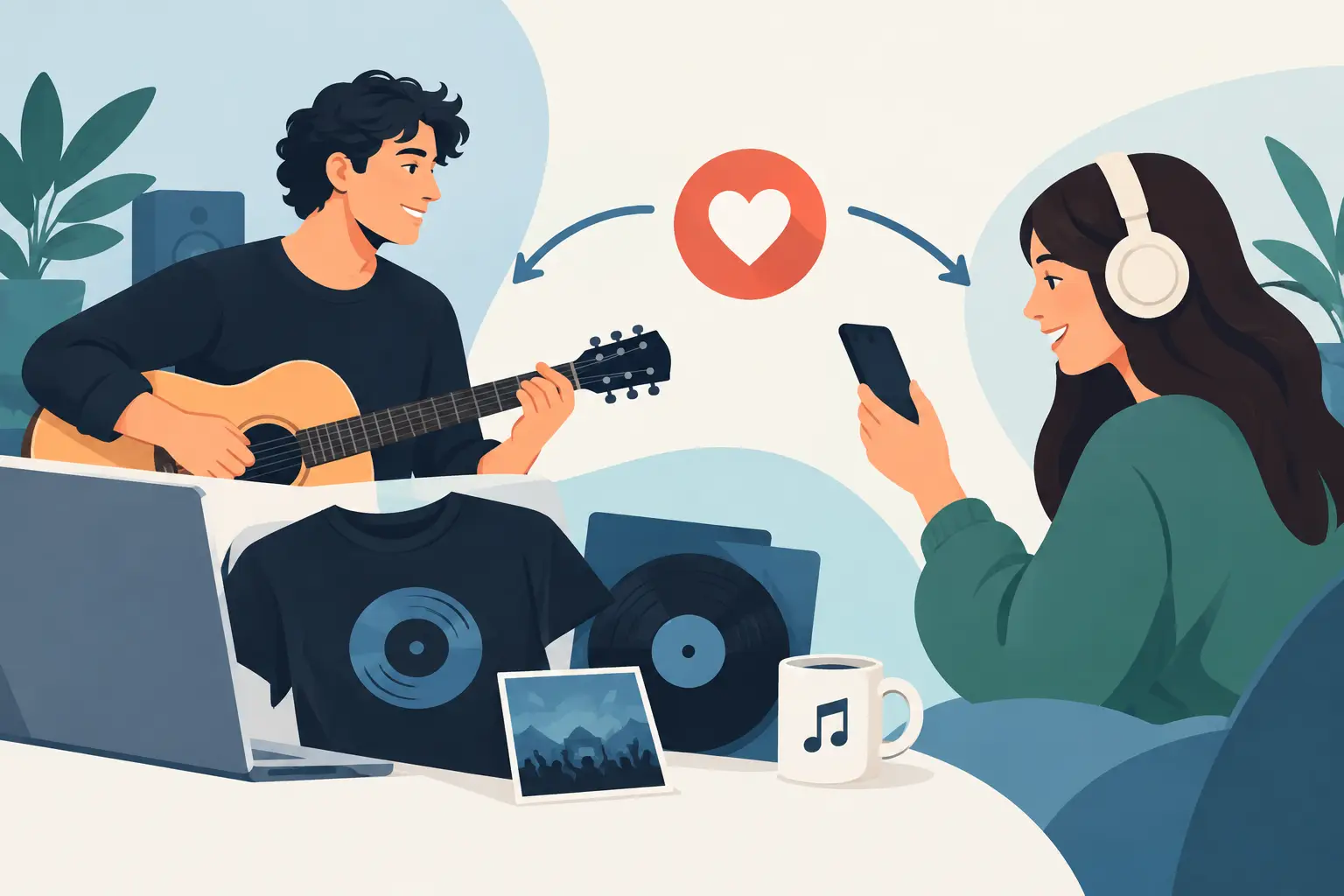
A stream can introduce a song in seconds. A direct purchase can turn that moment into a relationship. For an independent recording artist, direct to fan music sales create a space where listeners can move beyond the algorithm, support the work they value, and become part of the release journey.
Streaming remains essential for discovery. It puts new music in front of global audiences and gives a synth-pop hook, a country-informed lyric, or a polished pop chorus the chance to travel quickly. But discovery is not the same as ownership. A direct-to-fan model gives listeners a clear way to choose more: music they can keep, products that reflect the release, and a closer connection to the artist behind it.
Why Direct to Fan Music Sales Matter
The value of a direct sale is not only the transaction. It is the permission it gives an artist to build a more intentional fan experience. Instead of relying entirely on a platform's feed, playlist placement, or changing payout structure, the artist has a direct channel for sharing releases, shop updates, and future creative moments.
That distinction matters most when attention is fragmented. A listener might hear one track on Spotify, save it, and then never see the artist again unless an algorithm decides otherwise. A listener who visits an artist site, creates an account, or purchases a release has chosen a deeper level of engagement. That choice makes future communication more relevant and more personal.
For fans, direct purchasing can feel more meaningful than passive listening. They know their support reaches the artist more directly, and they receive something tangible or collectible in return. That could be a digital release, limited apparel, signed artwork, a special edition, or early access connected to a new song.
The model does have a trade-off. Streaming offers convenience and scale, while direct sales ask fans to take an extra step. The answer is not to treat one as a replacement for the other. The strongest independent strategy lets streaming lead discovery and lets the artist website become the destination for listeners who want to stay closer.
Build a Store Around the Music, Not Around Stuff
A shop performs best when it extends the world of a release. Random merchandise can make a store feel like an afterthought. Products connected to a song, visual era, lyric, or production story give fans a reason to care beyond the logo.
Start with a clear release center. Each new single or project should have an easy path from listening to supporting: hear the music, understand the creative identity, and find a small selection of relevant ways to buy. Too many options can slow down the decision. A focused store with a digital product, one or two high-quality physical items, and a limited release often feels more premium than a crowded catalog.
Product quality matters because it reflects the music. An artist whose work is presented as a premium sonic experience should bring the same care to visuals, product descriptions, photography, and packaging. The fan should feel that every detail belongs to the same artistic universe.
Pricing should be confident but realistic. A digital download can be accessible for a casual supporter, while a limited signed item or bundled package can serve the listener who wants something more substantial. There is no universal price point. It depends on audience size, product costs, shipping regions, and the perceived value of the release. The goal is not to push every fan toward the highest-priced item. It is to offer honest choices at different levels of commitment.
Give Fans a Reason to Buy Now
Urgency works when it is real. A limited run is compelling when it is genuinely limited. Early access feels valuable when fans receive it before the public release. A release-week bundle makes sense when it brings together items that naturally belong together.
Artificial countdowns and constant discounts can weaken an artist's positioning. If every item is permanently marked down, listeners may wait for the next sale instead of valuing the work at full price. A better approach is to create distinct moments around the music: a launch-week edition, a first pressing, a seasonal product drop, or a special package tied to a new visual campaign.
Exclusivity does not need to mean exclusion. A fan who only wants to stream should still feel welcome. The direct offer simply gives dedicated supporters an additional way to participate. That balance protects the broad reach of a release while rewarding the people who choose to come closer.
Make the Artist Site Feel Worth Visiting
Direct to fan music sales depend on a site that feels clear, current, and easy to use. Listeners should not have to search for the latest release, shop entry point, or way to join the artist's world. The page should quickly answer three questions: What does this artist sound like? What is new? What can I do next?
For a genre-fluid artist, that first impression is especially important. The message can position the music as contemporary and emotionally accessible without forcing it into a narrow label. Synth-driven atmosphere, pop immediacy, and country-rooted storytelling can sit together when the presentation is confident and consistent.
Every campaign should have one primary next step. A social post teasing a new track might lead to a pre-order. A release announcement might lead to the music page. A behind-the-scenes clip might lead to a limited product connected to the song. Sending fans to too many places at once creates friction. A focused invitation is more likely to convert.
Mobile experience also deserves attention. Many fans will arrive from Instagram, TikTok, or a text message, not from a desktop search. Product images need to load quickly, checkout needs to be simple, and the value of the offer needs to be obvious without requiring several screens of reading.
Use First-Party Fan Data With Respect
One of the practical advantages of selling directly is the ability to understand what supporters respond to. Purchase history, location, product interest, and email sign-ups can help an artist make smarter release decisions. If a limited item sells strongly in one market, that can inform future inventory. If fans respond to a specific visual era, it may deserve a longer life.
That information should be used to improve the fan experience, not to overwhelm people. A thoughtful email about a new release, an early-access offer, or a restock can feel useful. Daily promotional messages can feel transactional. The relationship is built through relevance, restraint, and a consistent creative point of view.
Fans also appreciate transparency. Be clear about shipping timelines, digital delivery, limited quantities, and what they can expect after a purchase. Small uncertainties can create unnecessary frustration, especially for international supporters. Clear communication protects trust, which is more valuable than a one-time sale.
Turn Release Campaigns Into Ongoing Fan Moments
A single can have a life beyond release day. The weeks around it can include a lyric-focused post, a production insight, a visual asset, a fan question, a limited shop item, or an acoustic reinterpretation. These are not distractions from the music. When handled well, they give listeners more entry points into the same emotional idea.
Michael Joseph Australia can use this approach to connect polished AI-assisted production with the human story at the center of every song. Fans may be interested in modern creative tools, but they stay for the feeling, melody, and point of view. Technology is part of the process, not the replacement for artistry.
Direct sales work best when the invitation feels like an extension of that artistry. A fan should never feel pressured to prove loyalty. They should feel that supporting the music directly gives them a more memorable way to experience it.
The next release is a chance to offer more than a link. Give listeners a reason to return, something worth keeping, and a clear place where their support helps the music keep moving forward.


Comments