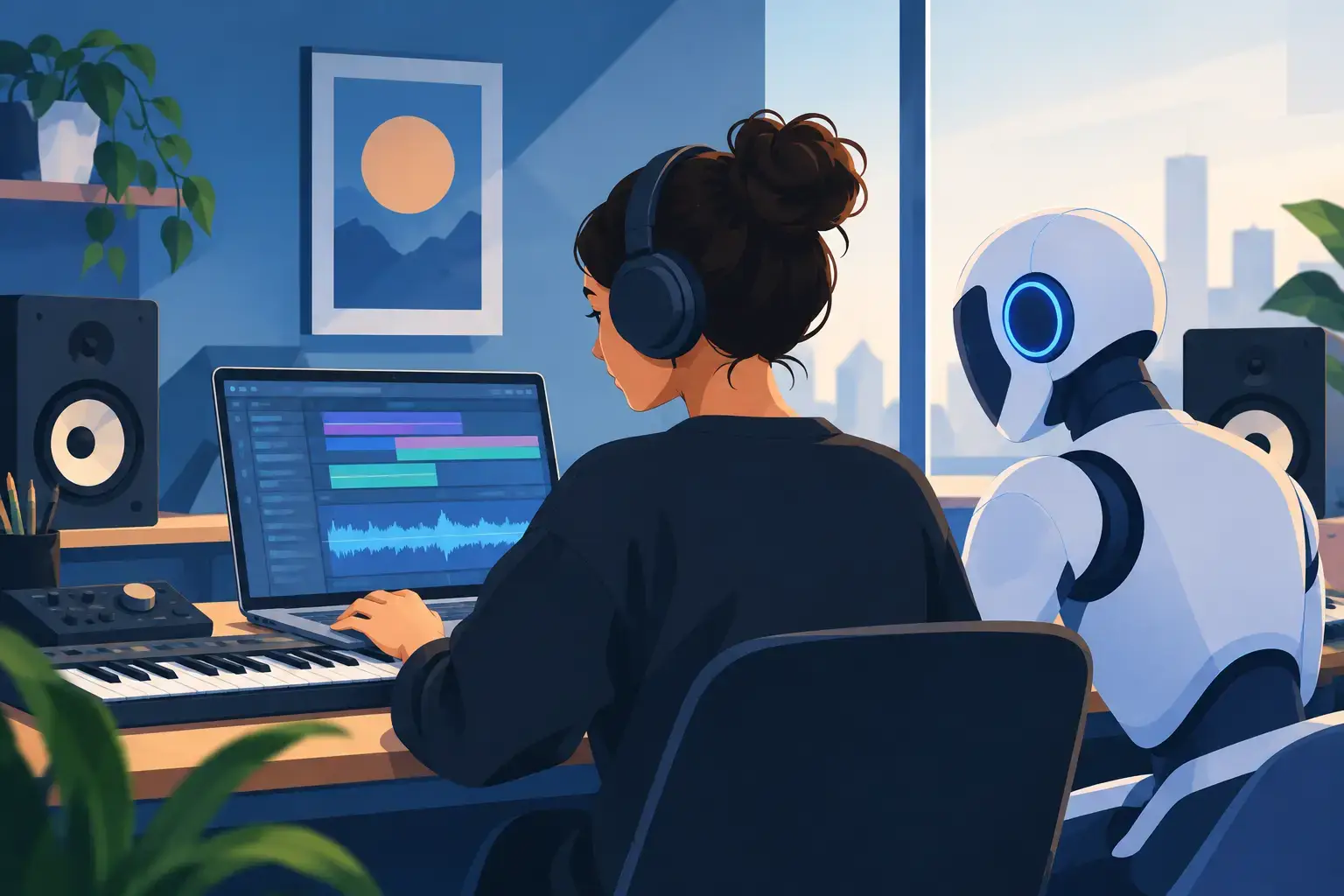
AI Music Production: The Artist Still Leads
A song can begin with a vocal hook recorded after midnight, a lyric pulled from a real conversation, or a synth texture that changes the emotional temperature of a chorus. AI music production can accelerate the path from that first spark to a finished record, but it cannot decide why a song deserves to exist. That decision still belongs to the artist.
For independent recording artists, the value of AI is not replacing the creative process. It is expanding the number of ways a clear creative vision can be heard. Used with intention, AI-assisted production can help shape more detailed arrangements, test new sonic directions, and move an idea closer to the premium sonic experience listeners expect from a modern release.
AI Music Production Is a Creative Tool, Not a Genre
There is no single sound called AI music production. The technology can support a wide range of creative choices, from building an early demo and refining a drum pattern to exploring vocal treatments, sound design, harmony, or mix references. A cinematic synth-pop track, a direct mainstream pop record, and a country-informed song built around storytelling may all use AI in entirely different ways.
That flexibility matters for artists who do not want to be confined by a narrow genre label. A song can hold the emotional immediacy of pop, the atmosphere of synth-driven production, and the grounded detail of country songwriting without treating those influences as separate lanes. The role of production is to make those elements feel intentional in the same world.
The strongest records do not announce the tools used to make them. They make the listener feel something quickly. A chorus has to lift. A lyric has to land. The production has to create enough space for the vocal, the melody, and the central emotion to stay in focus.
Where AI-Assisted Production Adds Real Value
Independent artists often work without the large teams, timelines, and studio budgets available to major-label projects. That does not mean they should settle for unfinished ideas or generic results. AI-assisted tools can make experimentation more accessible, especially during writing, arrangement, and pre-production.
An artist may use a tool to audition different instrumental energy before committing to a direction. A restrained verse might call for intimate keys and a distant pulse, while the same song’s chorus may need wider synths, live-feeling drums, or a guitar line that brings in country color. Testing possibilities early can save time later and sharpen the creative brief for every final production decision.
AI can also be useful when momentum matters. Inspiration is rarely tidy. When an idea arrives, the ability to capture a musical sketch, develop a structure, or hear multiple arrangement options can keep the writing session moving. The artist remains responsible for the final call: what stays, what goes, and what makes the song feel personal rather than merely polished.
This is where taste becomes the differentiator. Technology can offer options. It cannot reliably recognize the one choice that makes a pre-chorus ache, gives a lyric room to breathe, or turns a familiar pop progression into a distinct artist statement.
More Options Require Better Editing
The trade-off is simple: more creative options can also create more noise. If every sound is available, it becomes easier to add elements that compete with the song instead of serving it. A production can be technically dense and still feel emotionally empty.
Good editing is therefore central to AI-assisted work. The question is not whether a part sounds impressive on its own. The question is whether it earns its place in the record. Does it strengthen the hook? Does it support the vocal? Does it make the track more memorable after one listen?
For a listener, restraint can be as powerful as scale. A single vocal phrase with the right production around it often travels further than a crowded arrangement designed to prove how much is possible.
The Human Elements Listeners Notice First
Listeners may be curious about the technology behind a release, but they connect with the human signals in a song. They notice a vocal performance that sounds believable. They hear when a lyric has specificity. They remember melodic phrasing, emotional tension, and the confidence of a production that knows exactly what it wants to be.
That is why songwriting remains the center of the process. AI can support the construction of a track, but a song needs a point of view before it needs a final mix. It needs an emotional premise that feels lived-in, whether the lyric is about leaving, longing, reinvention, or the moment a relationship shifts beyond repair.
Authenticity does not require a stripped-back recording or a refusal to use modern tools. It comes from intention. A highly produced song can feel immediate and honest when the details reflect the artist’s voice. Equally, an acoustic recording can feel distant if the performance has no emotional stake.
For Michael Joseph Australia, AI-assisted production is part of a contemporary creative process, not a substitute for identity. The goal is music with pop clarity, synth-led atmosphere, and country-rooted storytelling that can meet listeners wherever they discover it - on streaming platforms, through social content, or directly through the artist experience.
Building a Release That Feels Distinct
The production process should begin with the song’s emotional destination. Before choosing sounds, identify the feeling the listener should carry into the final chorus. Is the track made for late-night reflection, open-road release, a dance-floor lift, or a close-up vocal moment? That answer guides arrangement, tempo, vocal treatment, and even how much space the mix needs.
From there, contrast creates movement. A great pop record often earns its biggest moment by holding something back earlier. The verse might be dry and intimate. The pre-chorus can introduce tension through harmony or rhythm. Then the chorus opens into a wider sonic field. AI tools can help explore those variations, but the arc must still be shaped around the listener’s attention.
Consistency matters too. Each release does not need to sound identical, especially for a genre-fluid artist. But there should be recognizable threads: a vocal character, a preference for certain emotional textures, a way of balancing polished production with direct songwriting. Those choices build trust across a catalog.
The best use of new technology is not chasing novelty for its own sake. It is giving a strong song the production language it deserves. Sometimes that means a bold, high-gloss arrangement. Sometimes it means simplifying the track until one lyric and one melody can do the work.
A Better Standard for Modern Independent Music
The question is no longer whether artists will use AI in music. Many already use technology throughout writing, recording, editing, mixing, and release planning. The more useful question is whether the finished music has identity.
A compelling record should sound considered, not automated. It should have enough detail to reward repeat listens while staying immediate enough to connect on the first play. It should feel current without being trapped by a passing production trend.
AI music production gives independent artists a larger creative palette. The artist supplies the perspective, the emotional standard, and the final sense of what belongs. Keep the song at the center, let technology serve the feeling, and make every release worth returning to.


Comments