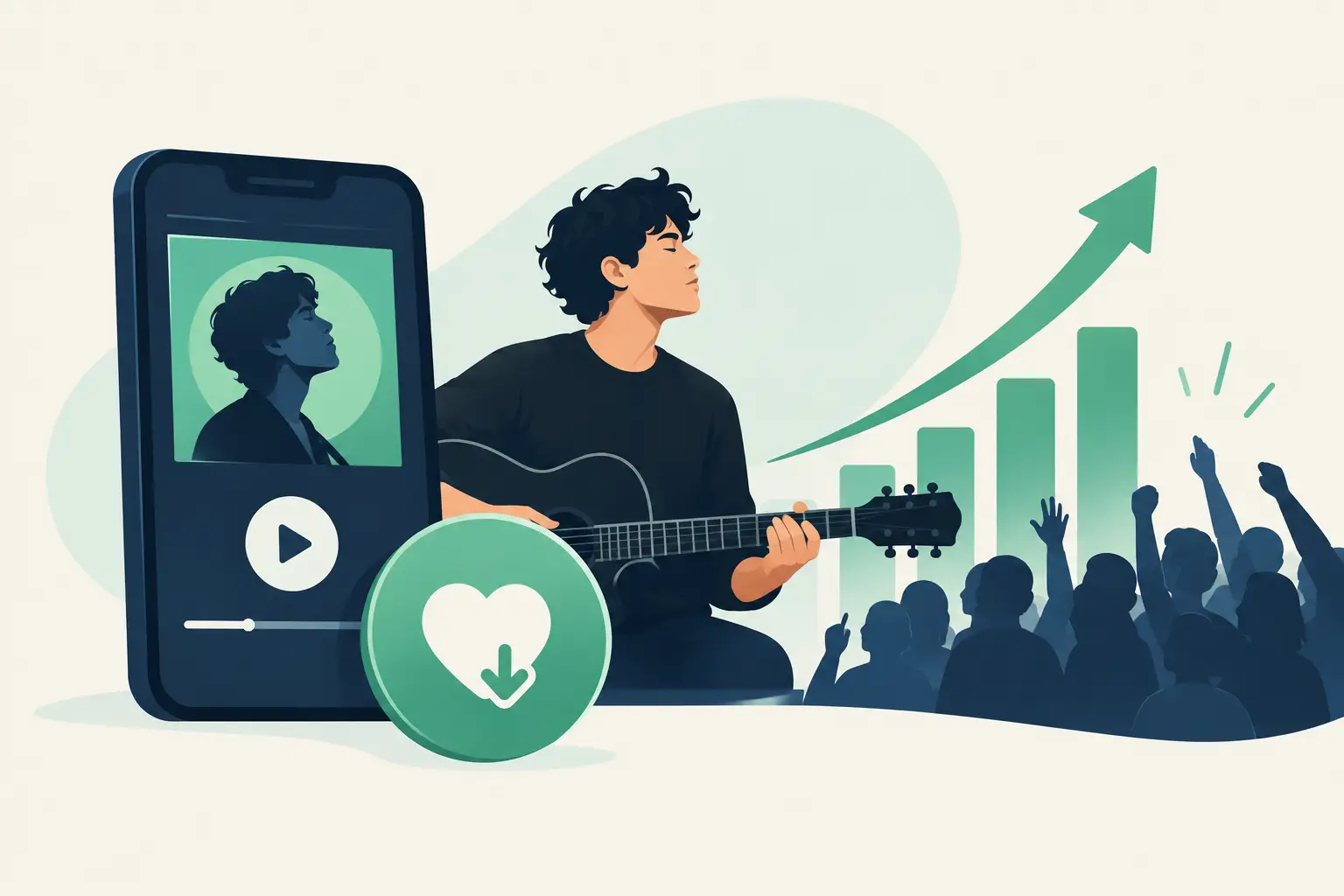
How a Music Pre Save Campaign Builds Momentum
A release can arrive with immaculate production, a strong hook, and a clear point of view, then still disappear into the weekly flood of new music. A music pre save campaign gives listeners one simple action to take before release day: commit to hearing the track when it lands. For an independent recording artist, that small moment of intent can turn scattered attention into a more focused first-week audience.
Pre-saves are not a substitute for a great song, compelling visuals, or consistent artist identity. They work best when those elements are already in place. Think of the campaign as the bridge between discovering a new release and actually pressing play when it matters.
What a Music Pre Save Campaign Actually Does
A pre-save campaign lets fans save an upcoming song, EP, or album to their preferred streaming service before it is available. Once the release goes live, the music is typically added to their library, saved tracks, or selected playlist automatically, depending on the platform and campaign setup.
The practical value is timing. Instead of asking a listener to remember a date, search for the artist, and make a decision later, the campaign reduces the path to listening. That matters because most casual interest is temporary. Someone may love a 15-second chorus in a social clip, but the next scroll, notification, or song can easily interrupt that intention.
For the listener, a pre-save is also a low-pressure signal: “I want to hear this.” For the artist, it provides a way to identify the audience that is most ready for the release. It can support stronger early activity, but it should never be positioned as a guaranteed shortcut to editorial playlists, algorithmic reach, or chart success. Streaming platforms use many signals, and no campaign can promise a specific outcome.
The real advantage is more durable. A well-run pre-save period creates a reason to talk about the music before it is out, while giving fans a direct role in its arrival.
Build the Campaign Around One Clear Promise
The campaign should lead with the music, not the mechanics. “Pre-save now” is an instruction, not a reason. Give listeners a specific emotional or sonic invitation: a late-night synth-pop release, a chorus built for open-road volume, or a country-rooted story delivered with modern pop lift.
That promise needs to stay consistent across every touchpoint. If the artwork feels cinematic, the teaser should carry that same atmosphere. If the song is immediate and high-energy, the campaign copy should be concise and direct. A premium sonic experience starts long before the first full stream. It begins with the expectation created around the release.
Avoid trying to explain every influence, production decision, and lyrical detail at once. Tease one memorable element. It might be a line from the chorus, a visual color palette, a vocal moment, or the story that inspired the song. Specificity gives people something to connect with and something to share.
Start Earlier Than the Final Week
For a single, two to four weeks is often enough to create momentum without exhausting the audience. A larger project may justify a longer runway, especially if each week reveals a different track, visual, or story. The right timing depends on how often your audience already hears from you and whether the release has a genuine narrative to sustain attention.
Launching too early can dilute urgency. Launching too late leaves little time for the campaign to travel beyond your most loyal followers. The goal is not to stretch anticipation indefinitely. It is to make the release feel present, imminent, and worth remembering.
Before announcing, confirm that the release has been delivered to your distributor, the metadata is accurate, the artwork is final, and the pre-save destination has been tested on mobile. A campaign loses energy quickly when a fan encounters a broken page or cannot find their preferred platform.
Create a Simple Pre-Save Journey
The best campaign experience is almost invisible. A listener sees a compelling piece of content, understands what is coming, and reaches the pre-save page in one or two taps. The page should clearly show the artist name, release title, artwork, release date, and a straightforward call to action.
Too many choices can weaken the moment. If the campaign page asks visitors to follow multiple accounts, sign up for several offers, browse a store, and complete a pre-save, the release itself becomes secondary. Save the broader fan journey for after the primary action is complete.
Trust also matters. Some pre-save tools ask fans to connect a streaming account. Be transparent about what the process involves and do not overstate what data will be used for. An independent artist earns long-term attention through respect, not friction disguised as engagement.
If email collection is part of the campaign, make it optional and clearly valuable. A short release update, an early visual preview, or access to a behind-the-scenes note can be enough. The exchange should feel like a closer connection to the music, not a gate around it.
Use Content That Earns the Ask
A pre-save link posted repeatedly without new context will not create momentum. Every piece of campaign content should add a fresh angle while returning to the same central release promise.
In the first phase, introduce the sound and atmosphere. A concise teaser with the strongest section of the track can establish the mood immediately. In the middle phase, give the audience a reason to care more deeply: a lyric fragment, the emotional premise, a studio moment, or a visual reference that shaped the release. In the final days, shift toward urgency with a direct countdown and a reminder that the track is about to arrive.
Not every post needs polished video production. A refined release visual can sit alongside a direct-to-camera thought, an acoustic vocal moment, or a short look at the creative process. For artists who use AI-assisted production, there is room to acknowledge that modern process with confidence, but the focus should remain on the song's feeling and craft. Technology is part of the creative palette, not the headline unless it is genuinely the story.
Make the request natural. “Pre-save if this feels like your kind of track” is warmer and more listener-centered than a constant demand for clicks. The campaign should invite participation, not pressure people into proving support.
Measure More Than the Number of Pre-Saves
Pre-save totals are useful, but they are only one measure of readiness. Look at which content formats drove the most visits, where listeners came from, how many people followed the artist, and whether email subscribers or returning fans responded differently from new audiences.
A modest number of pre-saves from listeners who consistently watch, comment, share, and return can be more valuable than a large burst of low-intent clicks. Quality matters because sustainable artist growth is built on repeat listening and real affinity, not campaign optics.
After release day, compare early streams and saves with the pre-save audience, then keep the strongest campaign content in rotation. A teaser that worked before release may become the opening clip for a post-release push. A lyric that generated comments may deserve its own visual. The campaign does not end when the music becomes available. It changes from anticipation to discovery.
Keep Release Day Focused
When the track is live, replace the pre-save message immediately. Ask people to listen, save, add the song to a personal playlist, and share it with someone who would connect with it. Keep the language grounded in the experience of hearing the release rather than vague claims about success.
Release day is also the moment to welcome listeners who are meeting the artist for the first time. The profile, visuals, and social posts should make it easy to understand the broader musical world: contemporary pop energy, synth-driven atmosphere, and country-informed storytelling without restrictive labels.
A music pre save campaign succeeds when it respects the listener's attention and gives a strong release a cleaner runway. Make the ask simple, make the creative promise memorable, and let the song give people a reason to stay after release day.


Comments